
Peripheral vs Full False Ceiling: Which Is Better?
A peripheral ceiling preserves height and suits most apartments; a full ceiling gives more lighting freedom where the room and the height allow it.
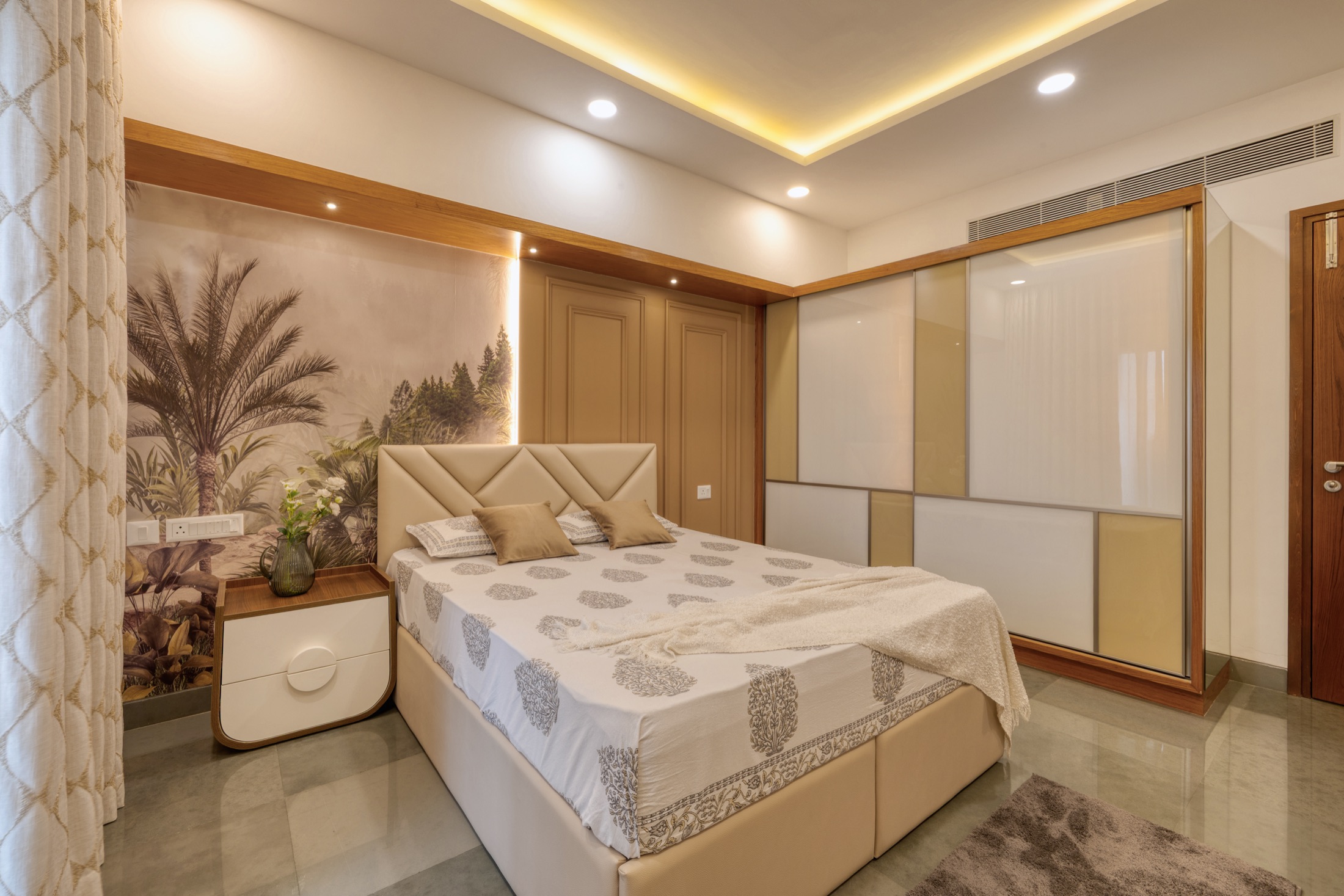
Once a false ceiling is decided on, the next question is how much of the ceiling it should actually cover — a border running around the room's perimeter, or a full ceiling across the whole area. Both are common, and the right one depends on the room's height, its function and what the lighting design needs to achieve.
Peripheral: The Height-Conscious Choice
A peripheral or cove false ceiling runs a band, typically 300 to 600 millimetres wide, around the room's edges while leaving the central slab exposed and painted. This drops the ceiling by far less than a full treatment, which makes it the more practical choice for apartments with limited floor-to-ceiling height, while still giving a clean edge to hide wiring and support cove lighting.
Full Ceiling: More Control, More Height Cost
- Allows recessed spotlights placed anywhere across the room, not just at the edges
- Fully conceals ducting, beams or uneven slabs across the entire ceiling
- Gives a more finished, seamless look in rooms with generous height
- Suits spaces like a living room or foyer where a stronger design statement is wanted
Lighting Possibilities Differ Significantly
A peripheral ceiling generally supports cove or edge lighting well but limits where downlights can be placed to the ceiling's border. A full ceiling opens up the whole surface for spotlights, a central fixture, or a mix of both — worth considering carefully if the lighting plan calls for illumination across the room rather than just around its edges.
What Suits Apartments vs Larger Homes
In a typical apartment with standard ceiling heights, a peripheral treatment is usually the more sensible default, reserving a full ceiling for rooms that specifically need it — often the living room or a foyer with a slightly taller ceiling. In villas or independent homes with greater height to work with, a full ceiling becomes a realistic option across more rooms without the same trade-off.
Choosing by Function, Not Just Preference
A bedroom used mainly for sleep may need little more than a peripheral ceiling with soft cove lighting, while a living room meant to host guests and highlight a feature wall might justify the full treatment's added design flexibility. Matching the choice to what each room actually does avoids over-specifying height loss where it isn't needed.
More ceiling isn't automatically better ceiling. The right amount is the amount the room's height and lighting plan actually call for.
Planning your own home?
Let us collaborate to shape your home or office with the care it deserves.