
Modular Kitchen Materials and Finishes: A Practical Guide
From carcass to countertop to hinges, here is what each part of a modular kitchen does and where it is worth spending.
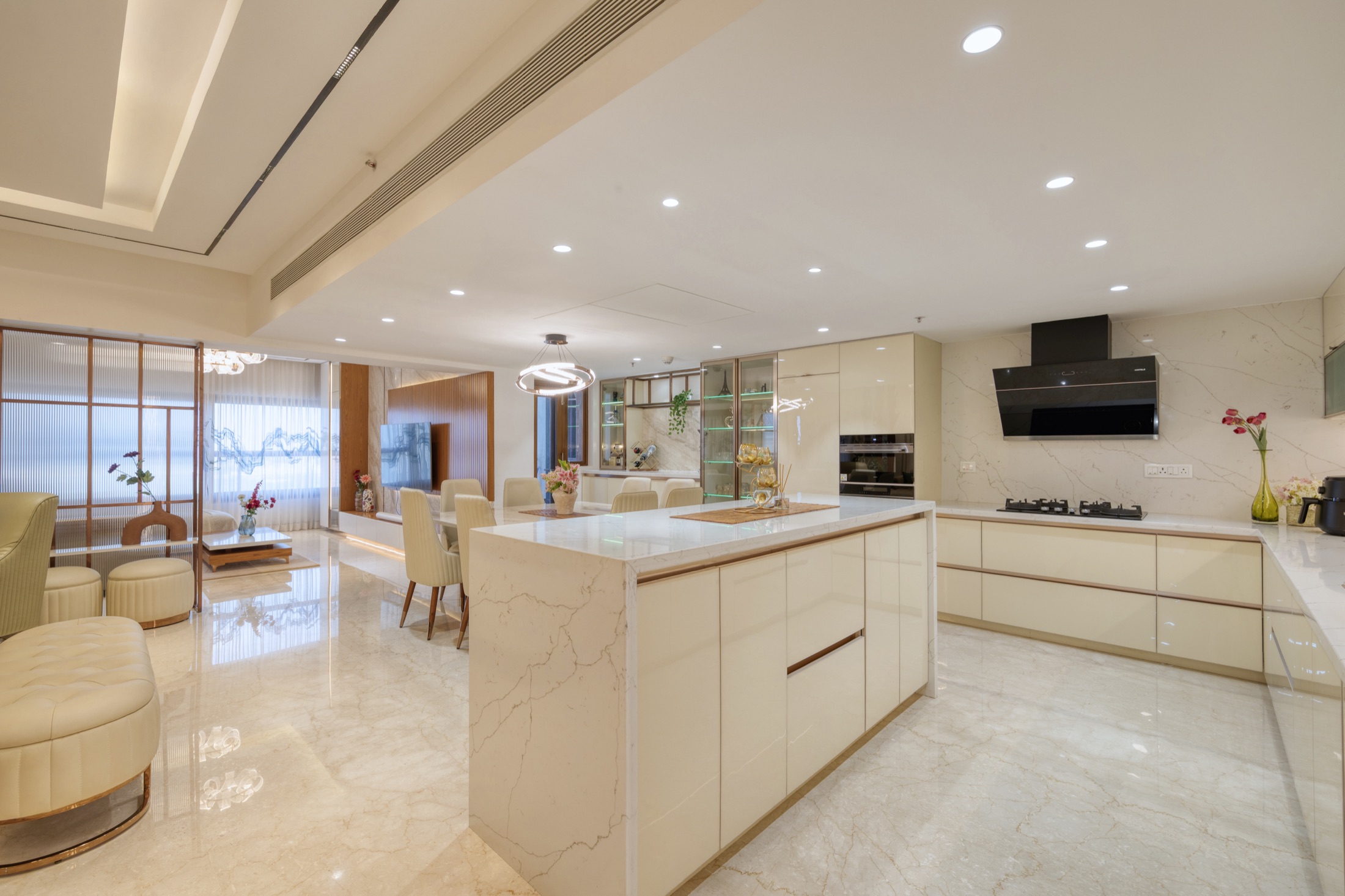
A modular kitchen is made of four layers that each age differently: the carcass or box, the shutters you see, the countertop you work on, and the hardware you touch a hundred times a day. Knowing what each layer does helps you spend where it counts and save where it doesn't.
The Carcass: The Part You Rarely See
The carcass is the structural box behind the shutters. Commonly used materials include plywood, particle board and MDF, in moisture-resistant grades. Kitchens see steam, splashes and humid Bangalore monsoons, so the carcass around the sink is where quality matters most. Ask which grade is being used, and what edge-banding seals the cut edges against water.
Shutters: Where Look and Maintenance Meet
- Laminate: durable, wide range of colours and textures, sensible for busy family kitchens
- Acrylic: high-gloss and rich in colour, but shows fingerprints and scratches more readily
- PU or painted finishes: a smooth, premium look that needs gentle care
- Membrane or vinyl-wrapped: good for profiled or grooved designs, and needs attention near heat
- Glass or aluminium-framed: lighter and more contemporary, usually chosen for a few upper units
Keep the shutter near the hob and the sink in the most forgiving material, and use the more delicate finishes on the units further away.
Countertops: The Hardest-Working Surface
Granite is familiar, sturdy and heat-tolerant. Quartz is uniform, non-porous and easier to keep hygienic, but should not take a hot pan straight from the flame. Engineered stones and solid surfaces each have their own charm and their own care rules. Choose for how you cook: heavy Indian cooking with hot vessels and turmeric is a real test of any surface.
Hardware: Small Parts, Daily Use
Hinges, channels and drawer systems decide how the kitchen feels years later. Soft-close hinges and full-extension drawer channels from a reputable maker are worth the extra. Ask what load the drawers are rated for, since a drawer of steel vessels is heavy. Baskets, tall units and corner solutions should be chosen for the way you actually store things, not just for the brochure.
Backsplash and Finish Details
The wall between counter and wall units takes oil and steam. Tiles, glass or a continuous slab are all options; choose something with few grout lines and an easy wipe. Finish the edges, the plinth and the junction with the wall carefully, because these are the spots where water and pests find a way in.
Match the Materials to How You Cook
A kitchen that sees a quick breakfast and a takeaway dinner asks little of its surfaces, while one where daily tempering, frying and pressure cooking happen needs sturdier choices. Think about oil, steam and heat before you think about colour. Deep, glossy shutters look beautiful on day one, but a busy family kitchen often rewards a matte or textured finish that hides the small marks of everyday life.
Ask to See Samples, Not Just Pictures
Colours on a screen or a catalogue rarely match what arrives on site. Ask for physical samples of the shutter, the countertop and the backsplash, and view them together in the light of your own kitchen at different times of day. Hold a sample near the window in the morning and under the lights in the evening, since warm and cool light can change a colour more than you expect.
- Ask for the exact brand, thickness and grade of each material in writing
- Check how edges, corners and joints are finished
- Test drawers and hinges in the showroom, not just look at them
- Ask how the material responds to water, heat and cleaning products
- Find out what repairs are possible if a shutter is damaged later
Care and Maintenance After Handover
Even the best kitchen needs a little care. Wipe spills promptly, especially near the sink and hob, avoid harsh abrasives on glossy surfaces, and keep a trivet handy for hot pans on quartz. Ask the maker for a short care sheet, and check the hinges and channels once a year. A little attention in the early years keeps a kitchen looking new far longer than most people expect.
Where to spend, where to save
- Spend on: sink-area carcass, hinges, drawer channels, countertop
- Balance: shutter finish and the backsplash
- Save on: upper units that are lightly used, decorative extras
A kitchen ages at its weakest layer, so it pays to choose each one with care.
Planning your own home?
Let us collaborate to shape your home or office with the care it deserves.